
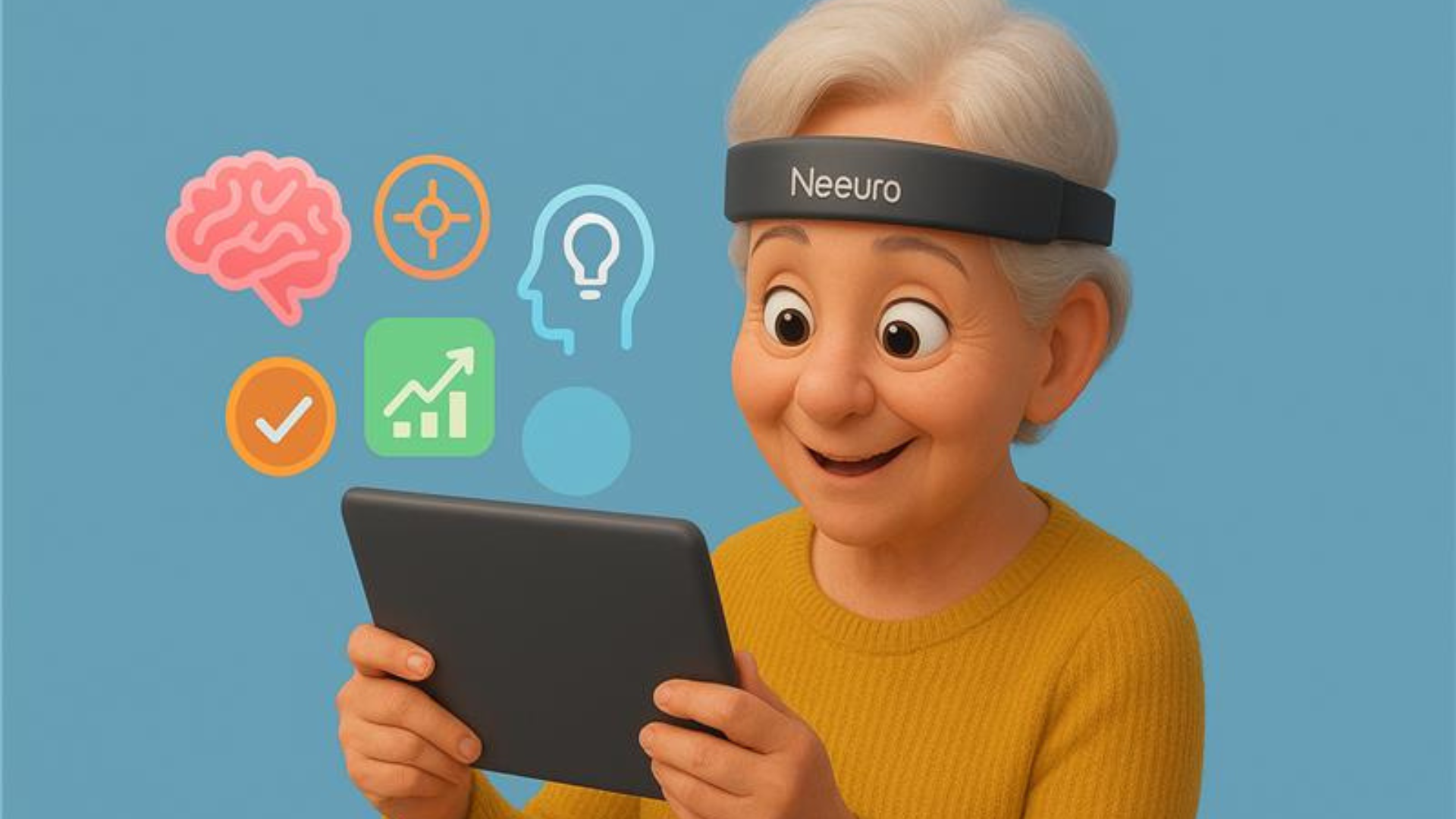
💬“Are seniors too old to learn tech?” At Neeuro, we’ve learned the better question is: “How can we make technology easier, meaningful, and empowering for them?” Because when neurotechnology is thoughtfully designed, seniors don’t just adapt — they thrive.
👵 The Science Says Otherwise
Research shows that neurofeedback training enhances cognition in older adults — boosting memory, focus, and attention.
📚A 2025 study (MDPI) found that seniors who train regularly show measurable gains in brain performance.[1]
🧩The aging brain remains plastic — capable of learning and adapting with the right tools and environment. [2]
🎨 Designed for Simplicity, Built for Confidence
We take an iterative, user-first approach to every design. Updates to our Neeuro SenzeBand and digital therapeutic solutions focus on simplicity and accessibility:
✅Clear visuals
✅Intuitive navigation
✅Gentle learning curves
Because if a senior can’t use it easily — we haven’t designed it right.
🤝 Bringing Neurotech to the Community
Beyond design, we’ve made outreach a priority. Through NeeuroFIT and collaborations with partners and initiatives such as the Silver Academy, among others, we’ve brought hands-on brain training directly to senior communities — helping older adults gain confidence in tech while boosting cognitive wellness.
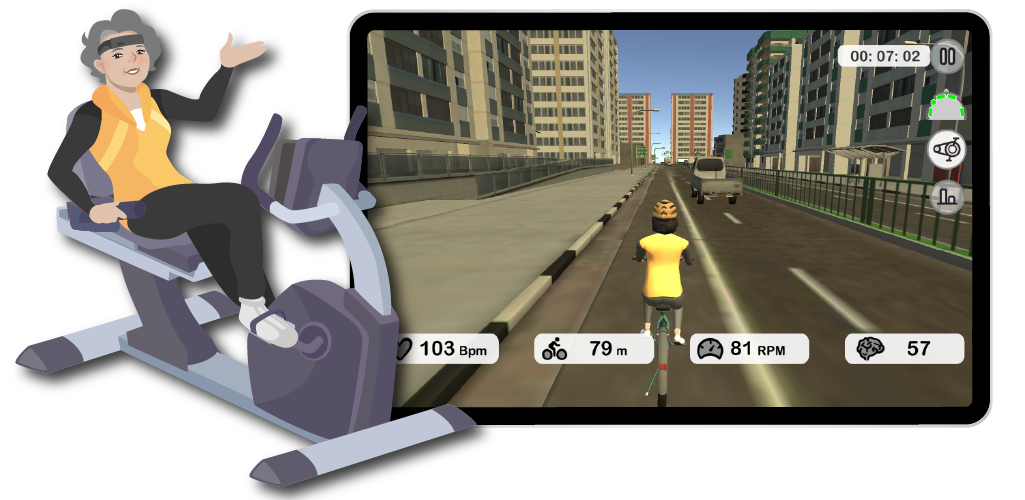
🚴 We’ve also validated NeeuroBike, our combined cognitive-physical training program, through hospital trials.
[Read more in our CEO Alvin Chan’s article on how NeeuroBike revolutionises elderly care.]
Because active ageing doesn’t happen alone — it happens in the community.
💪Empowerment Through Support
👨👩👧Empowering seniors means empowering their ecosystem — caregivers, trainers, and family.
With patience and encouragement, even hesitant users grow confident over time. Many now look forward to sessions, proud of learning something new and improving gradually through Neeuro’s brain training programs.
🌱The Most Heartwarming Feedback
What keeps us going are the stories from our senior users.
Many began unsure, saying things like “I’m not good with technology.”
But over time, they…
💬Celebrate small improvements.
💬Gain confidence to explore more on their own.
When we see them smiling after completing a session, we’re reminded that this is more than tech adoption — it’s self-empowerment in action.
🚀A Future of Lifelong Learning
In a fast-aging, tech-driven society like Singapore, the future of lifelong learning is inclusive. Not “too old to learn tech”, but “never too late to grow.”
✨ Let’s empower seniors to embrace technology, one brainwave at a time.
Neurotechnology, like the Neeuro SenzeBand, represents more than innovation. It’s an opportunity to make lifelong learning tangible, accessible, and joyful.
👉Explore our science-backed brain health solutions to see how neurotechnology can support active ageing.
How Neeuro Designs Its Brain Training Apps for Ease of Use for Seniors👵🧠📱
At Neeuro, we build digital therapeutic solutions powered by brain-computer interface (BCI) technology. As the Product Development Manager of our R&D team, we work to ensure that every user—especially older adults—can navigate our apps with confidence and ease.
We’ve learned that when it comes to designing for seniors, less is more. Simplifying interfaces, highlighting essential actions, and removing unnecessary clutter can make brain training for seniors a world of difference in usability and user satisfaction. [3]
Why “Less is More” Matters for Seniors💡
Older adults often face challenges like cognitive overload, small interface elements, and complex instructions. In digital therapeutics like NeeuroFIT and NeeuroBike, it can directly affect how often users engage and the effectiveness of training.
Research shows that reducing cognitive load and simplifying task flows significantly improves comprehension, confidence, and sustained use among older adults.[4]
Our philosophy is simple: strip away the unnecessary, highlight the essential, and make every interaction intuitive.
Streamlined Design: Focus on What Matters
We apply usability heuristics to revamp our apps by:
- Enhancing visual contrast🎨 – to improve readability
- Increasing default button and font sizes🔘 – to reduce errors and frustration
- Optimising layouts and instructions📝 – to guide users naturally
These design decisions align with global accessibility standards and age-inclusive design guidelines.[4]
By focusing on the essentials, we make our apps approachable without overwhelming our users.
User Feedback at the Core 👥
Good design comes from listening to real users. We conduct usability tests with older adults throughout our product development cycles to identify pain points, simplify navigation, and refine instructions.
Every iteration ensures that using the Neeuro SenzeBand alongside our apps is effortless and enjoyable.
Science-Backed Approach 📊
Research supports our design decisions: seniors benefit from larger, clear visuals, reduced cognitive load, and iterative, user-focused app design. Adding gamification elements like clear goals and progress feedback further boosts engagement and cognitive outcomes. Combining simplicity with meaningful gamification makes brain training for seniors intuitive, motivating, and effective.[5][6]
Conclusion ✅
At Neeuro, every design choice is about removing friction. By combining usability heuristics, iterative user testing, we create experiences that empower seniors to train their minds with confidence and ease. 🧠💪
Explore Our Solutions🔗
For deeper insight into digital therapeutics accessible and effective for seniors,
👉 Check out our solutions here: Neeuro Solutions Page
About Jessie Tan
Jessie Tan is an experienced design professional specializing in digital therapeutics and brain–computer interfaces, with over a decade of experience leading R&D-driven design and branding initiatives to deliver impactful, user-centric health technology solutions.
References
-
- Neurofeedback Training Modulates Brain Functional Networks and Improves Cognition in Amnestic Mild Cognitive Impairment Patients Aged 60–70 Years
https://www.mdpi.com/2076-3425/15/11/1243 - Effectiveness of Electroencephalography Neurofeedback for Improving Working Memory and Episodic Memory in the Elderly: A Meta-Analysis
https://www.mdpi.com/1648-9144/60/3/369 - Nielsen, J. (2020). Usability heuristics for user interface design. Nielsen Norman Group.
https://www.nngroup.com/articles/ten-usability-heuristics/ - World Wide Web Consortium (W3C). (2023). Web Content Accessibility Guidelines (WCAG) 2.2.
https://www.w3.org/TR/WCAG22/ - Lampit, A., Hallock, H., & Valenzuela, M. (2020). Computerized cognitive training in cognitively healthy older adults: A systematic review and meta-analysis. PLOS Medicine, 17(11), e1003199.
https://journals.plos.org/plosmedicine/article?id=10.1371/journal.pmed.1001756 - Lumsden, J., Edwards, E. A., Lawrence, N. S., Coyle, D., & Munafò, M. R. (2020). Gamification of cognitive assessment and cognitive training: A systematic review. Journal of Medical Internet Research, 22(7), e16493.
https://pmc.ncbi.nlm.nih.gov/articles/PMC4967181/
- Neurofeedback Training Modulates Brain Functional Networks and Improves Cognition in Amnestic Mild Cognitive Impairment Patients Aged 60–70 Years
Take Fitness to the Next Level with NeeuroBike!



Leave a Comment