
When individuals leave an addiction recovery centre, they are often equipped with five to 10 different calming techniques to practice independently. However, without a clear way to determine which methods are truly effective for each person, recovery can become an uncertain process of trial and error.
Dr. Terry Spokes, Clinical Director of The Winslow — the first private residential addiction recovery centre in Singapore — sought to address this challenge. By integrated the Neeuro SenzeBand and MindViewer into the program, the team was able to introduce a more personalised and data-driven approach to recovery.  The impact was both immediate and measurable. Clients could observe their brain calming down in real time, providing tangible feedback and motivation. At the same time, therapists gained valuable insights into which techniques were effective for each individual, allowing them to refine treatment strategies with greater precision.
The Winslow's Neurocognitive Rehabilitation programme integrates psychotherapy with neurorestorative interventions, including EEG-guided neurofeedback, cognitive remediation, and mindfulness-based recovery techniques.
In one case, a client's entire recovery plan was revised because the SenzeBand and MindViewer revealed something no one had previously noticed: he required guided audio support to benefit from calming exercises, rather than practicing the technique independently.
This is not a story about complicated brain science. It is a story about one tool that helped people find what works for them.
The Hidden Gap Between "It Works" and "It Works for You"
At The Winslow, the core challenge of addiction recovery is helping each person find their own sustainable way to manage difficult emotions without reaching for alcohol, medication, or other substances. Every client responds differently to calming techniques, and what works well for one individual may do very little for another.
Before integrating the SenzeBand and MindViewer, Dr. Spokes and his team relied primarily on what clients reported about their own experience. This created two persistent difficulties: it was often hard to convince clients that techniques such as breathing exercises or guided audio had any real, physical effect on their nervous system, and it was equally difficult to determine objectively which approach was the best fit for each person. Without something visible and concrete to demonstrate the impact, some clients remained unconvinced, and progress stalled.
Why Neeuro: Non-Intimidating by Design, Practical by Nature
When Dr. Spokes began exploring EEG neurofeedback tools for his program, client experience was a primary consideration. Patients at The Winslow often come in carrying significant anxiety, and the prospect of a clinical-looking device can heighten that unease.
Equally important was its accessibility. Dr. Spokes tested the device with his own staff and family before bringing it to any client and found it intuitive enough that therapists without specialised neuroscience training could use it in a meaningful and clinically relevant way.
Seeing Is Believing: How Real-Time Brain Data Changes the Therapy Session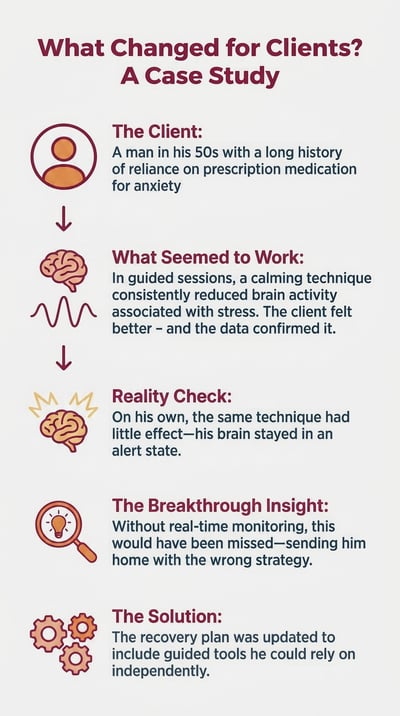
Integrating the EEG-guided neurofeedback transformed the way Dr. Spokes and his team conduct one-on-one sessions. With the device in use,
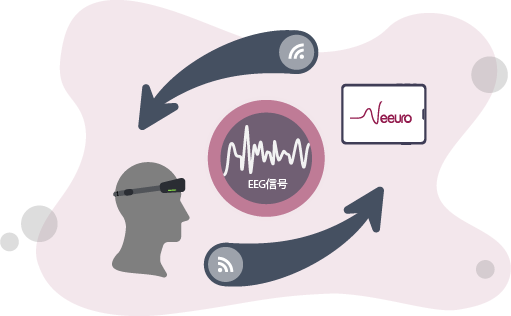
both therapist and client can observe changes in brain activity in real time as different calming techniques are practiced, whether breathing exercises, guided audio, or visual imagery.
When a technique is effective, the brain shifts from a more active, alert state, associated with what scientists call beta activity, into a calmer, more settled state known as alpha. For clients, seeing that change happen in their own brain builds a level of confidence that verbal reassurance alone rarely achieves. For therapists, it removes the guesswork from the process: when several approaches are tested in a single session and one produces a clearly stronger response, the path forward becomes evident.
In Dr. Spokes' words, the EEG- based neurofeedback gives clients "confidence that they're doing it correctly and that if they continue to do it, it's going to help them."
Advice for Other Healthcare Providers: Start with Understanding, Not Technology
Drawing from his experience at The Winslow, Dr. Spokes shares two essential recommendations for healthcare providers exploring neurotechnology:
- Prioritize Pre-Session Education
Begin with a simple introduction to the fundamentals of brainwaves and session goals. This helps clients understand what they are seeing and shifts them from passive participants to active collaborators.
Framing the SenzeBand as a collaborative ally encourages engagement and builds ownership over the recovery process.
- Define Your Clinical Rationale
Be clear about why and how the technology will be used before introducing it to clients. Dr. Spokes tested the SenzeBand extensively with staff and family to ensure it could be applied in a way that was both meaningful and appropriate to his practice.
He also keeps its application focused within his expertise, using it not for diagnosis, but to better understand which therapeutic approaches work best for each individual.
About The Winslow:
The Winslow is Singapore's first private residential addiction recovery centre and the only programme of its kind licensed by the Ministry of Health. Led by Senior Consultant Psychiatrist and Medical Director Dr Munidasa Winslow, former Chief of Addiction Medicine at the Institute of Mental Health, the centre delivers evidence-based, individualised care for substance use and behavioural addictions within a fully discreet residential environment.
Explore how Neeuro's brain-computer interface solutions are reshaping mental fitness.



Leave a Comment