

I recently completed a road trip through the South Korea countryside with my family. The convenience of GPS navigation was undeniably powerful, giving us the freedom to be on our own time, target uncharted places, and maximize our efficiency.
The reality of this convenience struck me one evening when a local friend picked us up for dinner. We were staying deep in a farmland area, far off from main roads and without streetlights. She drove confidently, without any GPS. Astonished, I asked her how she had navigated to our unfamiliar place. Her answer was profound: she simply navigated towards a landmark and a distant light, instinctively knowing the direction. She wasn’t just driving; she was exercising her spatial ability muscle [7] that I had nearly outsourced!
This powerful contrast forced a reflection: What is the intangible cost of consistently automating this fundamental human skill? The convenience is clear, but the price is the gradual erosion of a crucial mental aptitude.
📱The Hidden Cost of Convenience: Is Too Much Reliance on Technology Eroding Your Brain's GPS?
When navigation or problem‑solving becomes a passive “stimulus‑response” activity, the brain is no longer actively constructing a cognitive map—the allocentric mental model that engages the hippocampus. Without regular practice, this vital skill weakens through disuse. Research shows that reduced spatial engagement contributes to a poorer sense of direction, diminished independence, and vulnerability to age‑related decline.
- Dementia Link: Spatial disorientation is consistently identified as one of the earliest and most prominent symptoms of Dementia and Alzheimer's disease (AD). [5,6]
- Neurocognitive Basis: This deficit, often manifesting as difficulty with navigation or getting lost, is strongly linked to early structural changes, specifically the atrophy and functional disturbances in the hippocampus and entorhinal cortex —the very brain regions responsible for generating and maintaining our cognitive maps [2,3].
🧠Spatial Ability Defined: Understanding the Brain's Control Center
Spatial Ability is the capacity to understand and mentally manipulate shapes, images, and the relationships between objects in three-dimensional space. Weak spatial skills impact us daily, leading to struggles with navigation, organizational chaos (like packing efficiently), and even basic motor skills (like parking a car).
Importantly, spatial ability is part of executive functions, the set of high-level cognitive skills that act as your brain's control center [1]. Executive functions, located primarily in the prefrontal cortex, include attention, working memory, inhibitory control, and spatial reasoning. Together, they enable us to plan, regulate behaviour, and achieve goals.
🚀 How is Spatial Ability Important ?
Spatial Reasoning is Key to Success in STEM and Daily Life
Strong spatial skills are a fundamental predictor of success in a technological and visual world:
- Education: Spatial skills are crucial for mathematics, engineering and STEM because they enable the visualization of problems, the understanding of relationships between objects, and the ability to manipulate concepts mentally [4].
- Technology: Spatial reasoning is critical in cutting-edge fields like AI, robotics, and computer graphics, where mental modelling of environments and objects is essential for design and programming.
- Everyday Life: From performing well in sports (tracking objects, anticipating movement) to simple tasks like packing luggage or successfully following instructions to assemble furniture, spatial awareness makes daily life smoother and more efficient.
💡How to Improve Spatial Ability and Strengthen Your Cognitive Map
Strengthening the spatial ability requires deliberate, consistent practice: navigate without GPS for familiar routes or short trips to reinforce cognitive maps [7], play puzzles involving mental rotation, and engage in activities like drawing, sports, or assembling objects.
Seek out tasks that challenge spatial visualization and memory. Brain-stimulating programs such as NeeuroFIT Brain Training Course, designed by neuroscientists, specifically target and enhance cognitive functions like spatial ability through gamifications [8].
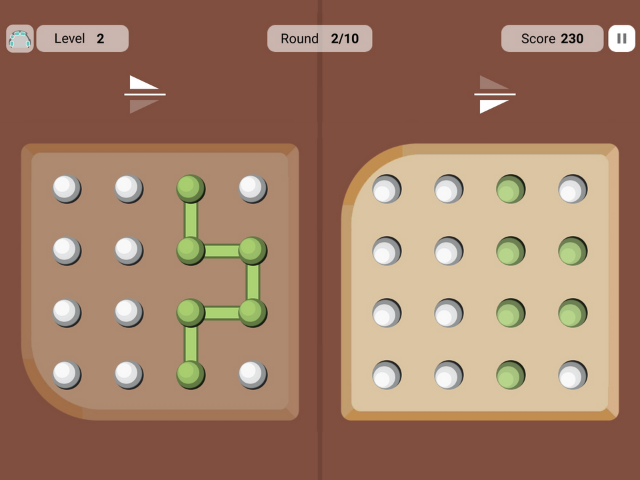
Dot Connect is engineered to challenge visual-spatial abilities and mental rotation. The player studies a pattern of dots and lines, then mentally replicate, flip, or rotate the entire shape in two- or three-dimensional space to solve complex geometric puzzles. This targeted practice strengthens the ability to manipulate objects mentally without physical interaction.
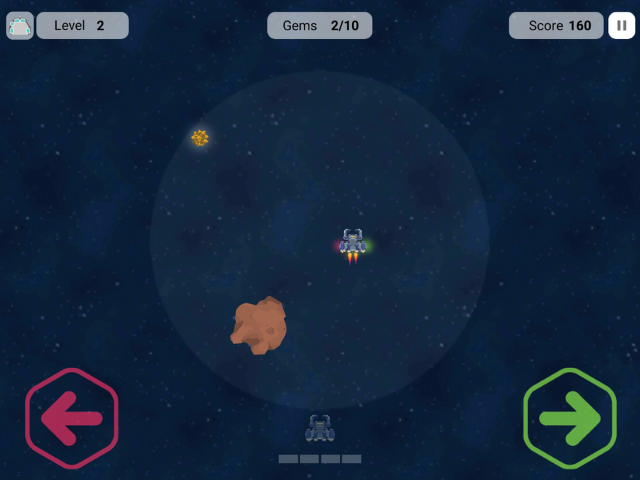
Space 360 further enhances spatial, navigational, and orientational skills by tasking the user to mentally orient objects in a simulated 360-degree environment.
Regularly challenging your spatial skills nurtures growth, sharpens daily functioning, and guards against decline.
References:
-
- Diamond, A. (2013). Executive Functions. Annual Review of Psychology, 64, 135–168. doi:10.1146/annurev-psych-113011-143750 https://pubmed.ncbi.nlm.nih.gov/23020641/
- Münzer, S., & Baus, J. (2006). GPS navigation and spatial learning: an investigation of the effects of navigation mode on the acquisition of environmental knowledge. Spatial Cognition & Computation, 6(3), 263–280.
- Maguire, E. A., Gadian, D. G., Johnsrude, I. S., Good, C. D., Ashburner, J., Frackowiak, R. S. J., & Frith, C. D. (2000). Navigation-related structural change in the hippocampi of taxi drivers. Proceedings of the National Academy of Sciences, 97(8), 4398–4403. https://pubmed.ncbi.nlm.nih.gov/10716738/
- Kathie A. Gilligan-Lee, Zachary C.K. Hawes, Kelly S. Mix (2022). npf Science of Learning. Spatial Thinking as the Missing Piece in Mathematics Curricula https://www.nature.com/articles/s41539-022-00128-9
- Puthusseryppady, V., & Emrich-Mills, L. (2020). Spatial Disorientation in Alzheimer's Disease: The Missing Path From Virtual Reality to Real World. Frontiers in Aging Neuroscience, 12, 550514. https://pmc.ncbi.nlm.nih.gov/articles/PMC7652847/
- Alzheimer’s Association - 10 Early Signs and Symptoms of Alzheimer’s and Dementia https://www.alz.org/alzheimers-dementia/10_signs
- MIT News (2024)- Just thinking about a location activates mental maps in the brain https://news.mit.edu/2024/thinking-about-location-activates-mental-maps-in-brain-0612
- Neeuro. (2022/2023) - Improving Cognitive Health with Gamification and EEG https://www.neeuro.com/science
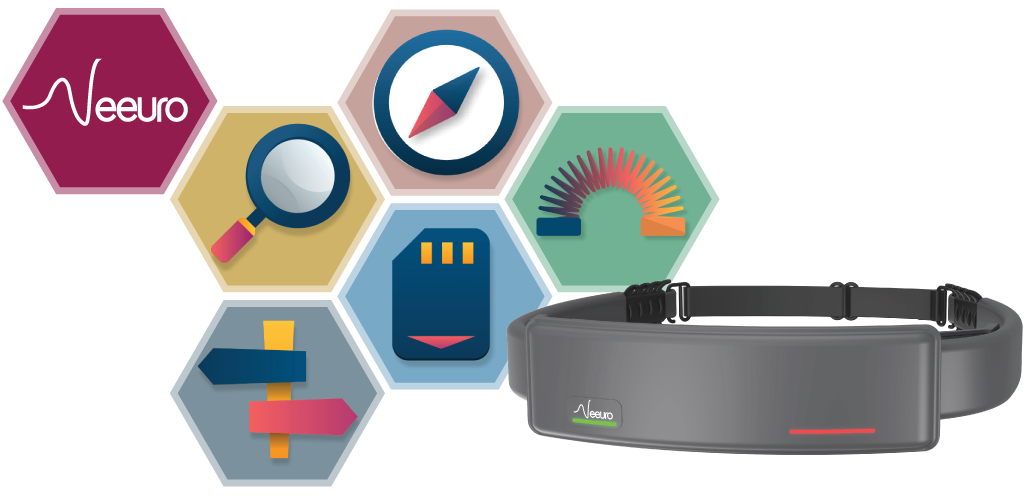

Partner with Us to be a NeeuroFIT Certified Trainer.



Leave a Comment