
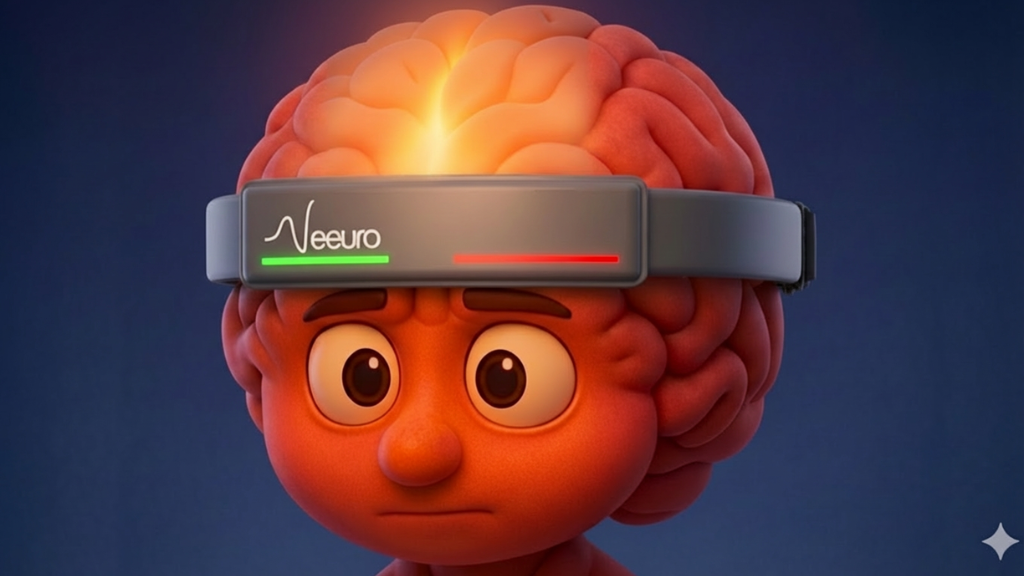
The prefrontal cortex plays a central role in how we focus, plan, make decisions, and regulate our reactions. When this part of the brain functions well, daily tasks feel more manageable.
Because of its importance, many people look for realistic ways to strengthen the prefrontal cortex using methods supported by current neuroscience.
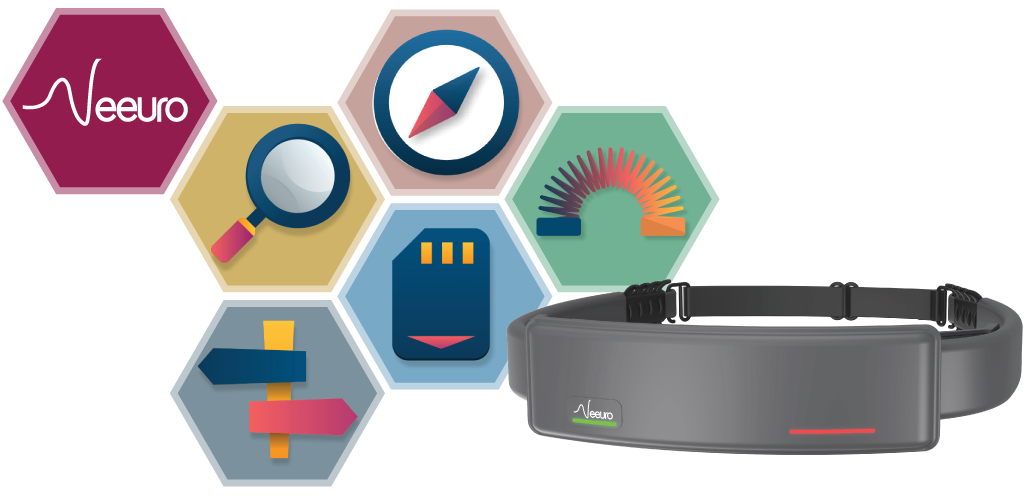
In recent years, cognitive training tools that provide real-time feedback have changed how this type of training is approached. Research on attention training shows that repeated, targeted engagement of attention networks can improve executive control and cognitive endurance [1][3]. One example is Cogo, a 3D game where a bird only progresses when the user’s attention reaches a specific threshold. The game uses EEG signals collected by the Neeuro SenzeBand to determine attention levels.
Since progress in the game depends on sustained focus, users practice the type of mental engagement that activates the prefrontal cortex. With repeated use, this type of targeted challenge helps strengthen the prefrontal cortex through consistent practice.
Another effective approach combines physical movement with mental tasks. Studies on exercise and cognition show that combining aerobic activity with cognitive challenges improves prefrontal activation and executive function more than either method alone [2][4]. This method is known for improving both cognitive endurance and executive functioning. NeeuroBike represents this idea well. The app connects to a stationary exercise bike through a cadence sensor. As the user pedals, the in app character moves through different environments and encounters short games involving memory, attention, and quick thinking.
The SenzeBand continues to track focus levels throughout the session. This type of dual task activity supports the prefrontal cortex by engaging both body and mind at the same time.
A slower and more reflective approach can also contribute to prefrontal cortex development. High stress disrupts prefrontal cortex activity, so learning to manage internal states improves cognitive performance [5][6]. Galini centers on this idea. The app guides users through breathing routines and mindfulness practice, and the SenzeBand measures changes in attention and relaxation during each session.
By learning to reduce stress driven interference, users support clearer function in the prefrontal cortex and gain better control over their emotional responses.
These three approaches create a rounded framework for long-term cognitive development. One method trains deliberate focus. Another strengthens mental and physical coordination. The last one teaches calm regulation. All of them contribute to a more resilient prefrontal cortex when practiced consistently, which aligns with current findings on neuroplasticity and executive function training [3][4].
The use of EEG guided feedback makes this type of training more precise. Instead of guessing whether something is working, users can see how their attention shifts in real time. This provides clearer insight into which habits are effective and how cognitive patterns improve over time.
Strengthening the prefrontal cortex is not a fast process. It grows through repetition, structured challenges, and steady improvements in self-regulation. With tools such as Cogo, NeeuroBike, Galini, and the SenzeBand, individuals can follow a more measurable and engaging path toward stronger focus and better executive function.
Download Cogo, NeeuroBike, Galini here.
References:
-
-
- Tang, Y. Y., & Posner, M. I. (2020). Attention training and attention state training. Trends in Cognitive Sciences, 24(4), 222 to 232.
- Herold, F., Wiegel, P., Scholkmann, F., & Müller, N. (2019). Applications of functional near infrared spectroscopy in exercise cognition research. Neurophotonics, 6(4).
- Mulquiney, K., Hoy, K., & Fitzgerald, P. (2020). Brain training and neuroplasticity. Neuropsychological Rehabilitation, 30(2), 199 to 220.
- Gavelin, H. M., Dong, C., Tangen, G. G., & Bherer, L. (2021). Dual task training improves cognitive functions in older adults. Frontiers in Aging Neuroscience, 13.
- Goleman, D. & Davidson, R. (2017) updated findings cited in 2021 reviews. The science of meditation and mindfulness effects on executive function.
- Gao, L., Xia, L., & Zhang, W. (2022). Improvements in prefrontal activation during mindfulness training. Human Brain Mapping, 43(5).
-
Partner with Us to be a NeeuroFIT Certified Trainer.



Leave a Comment